A day in the life of a beetle
Follow one kind of creature across different moments and places.
Your collection is the story of your time in the park. Here are ideas for adding variety, choosing keepers and shaping an album that feels like your own.
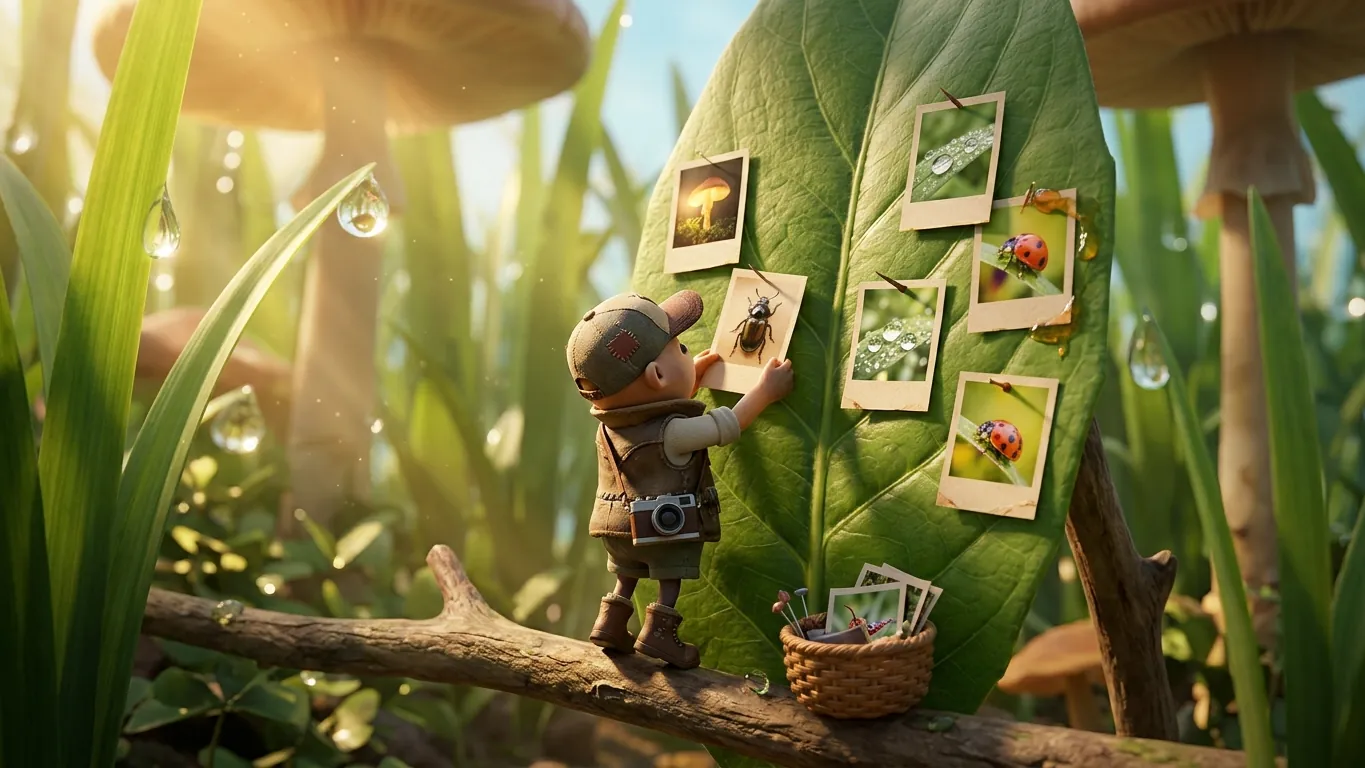
Every photo you keep becomes part of your collection, and over time it turns into a visual diary of your adventure. Looking back through it shows how your eye has developed, from early experiments to more confident compositions.
The collection is also a source of motivation. Gaps in it can inspire your next outing, and favourite shots remind you which places and moments you enjoyed most.
A strong collection usually has range. Try to include different subjects, such as creatures, plants, dewdrops and wider landscapes of the grass jungle. Mix your viewpoints too: some low and dramatic, some high and descriptive, some extremely close.
Light adds another dimension. Photos taken with backlight, side light and shaded light each have their own mood. When you notice your recent shots looking similar, that is a good cue to try something different on your next session.
Themes can give your album a sense of shape. Here are a few ideas.
Follow one kind of creature across different moments and places.
Focus on drops, reflections and sparkle in the morning sun.
Capture caps, gills and stems from many angles and heights.
Show the scale of the park with sweeping scenes from high points.
Reviewing your photos is where much of the learning happens. When you look at a shot, ask what works and what could be better. Is the subject clear? Is the focus where you wanted it? Does the timing capture something interesting?
If you have several similar photos, compare them side by side and keep the strongest. Being selective makes your collection feel more rewarding to browse. It also helps you spot patterns in your own style, such as a love of low angles or backlit scenes.
Do not be too hard on yourself. A photo does not need to be technically perfect to be meaningful. Sometimes a shot is worth keeping simply because it reminds you of a lovely moment.
Once your album has some depth, use it as a map for future sessions. If you have many close-ups but few wide views, plan a climb to a high point. If one area of the park appears rarely, head there next.
This gentle cycle of shooting, reviewing and returning keeps the game fresh. Your collection becomes not just a record of the past, but a guide that nudges you toward new discoveries.
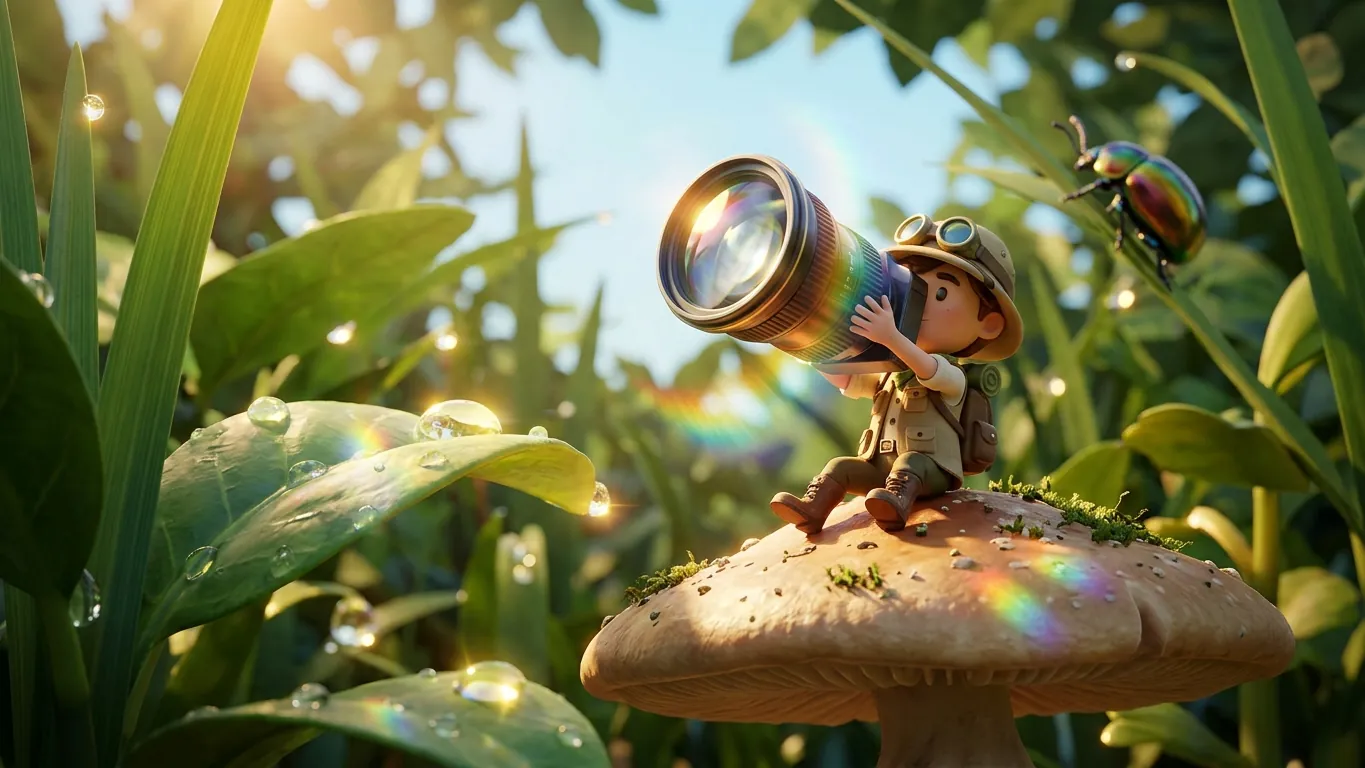 How lenses open up new possibilities
An explainer on unlocking lenses in the tiny park photo game, how new lenses expand your options and how to fold them into your shooting habits.
Read more
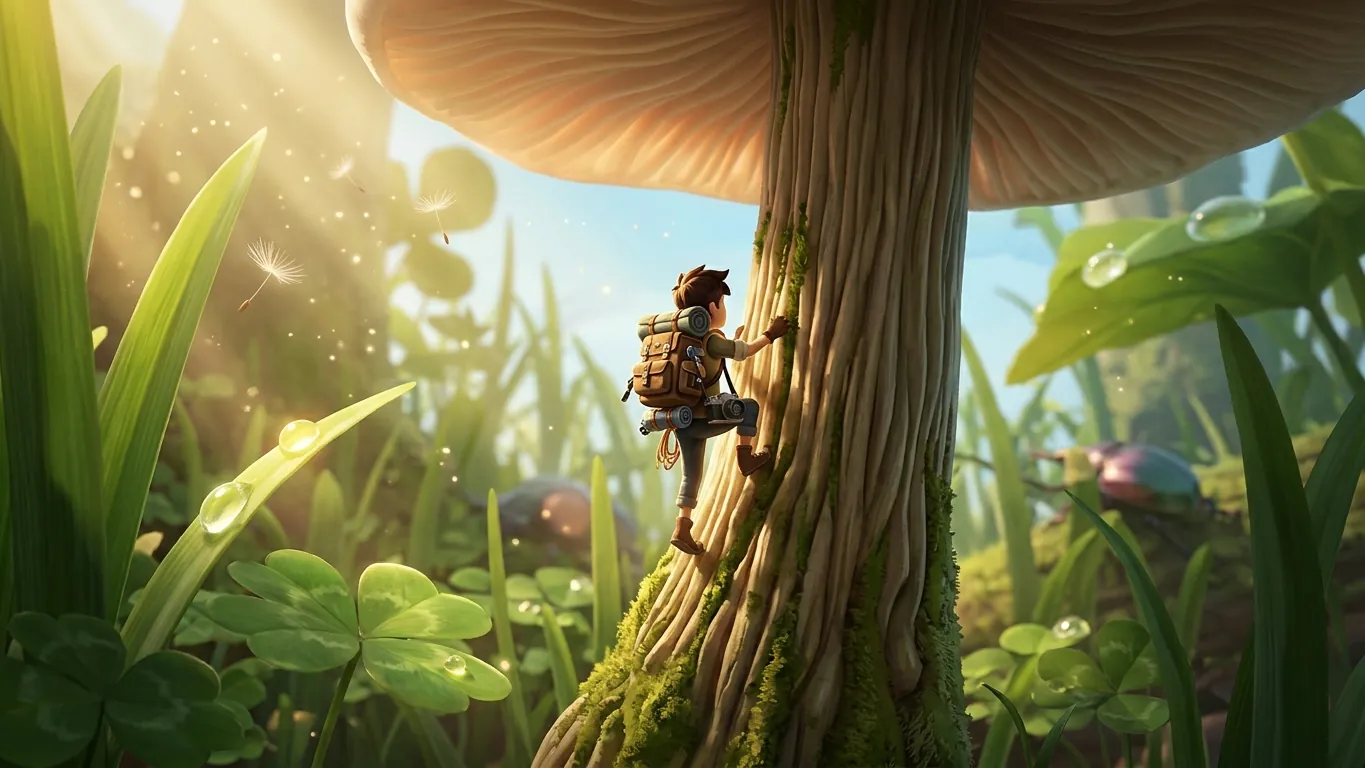 Climbing mushrooms and crossing grass jungles
Exploration tips for the tiny park world: climbing mushrooms, finding vantage points, moving through dense grass and spotting photo subjects along the way.
Read more
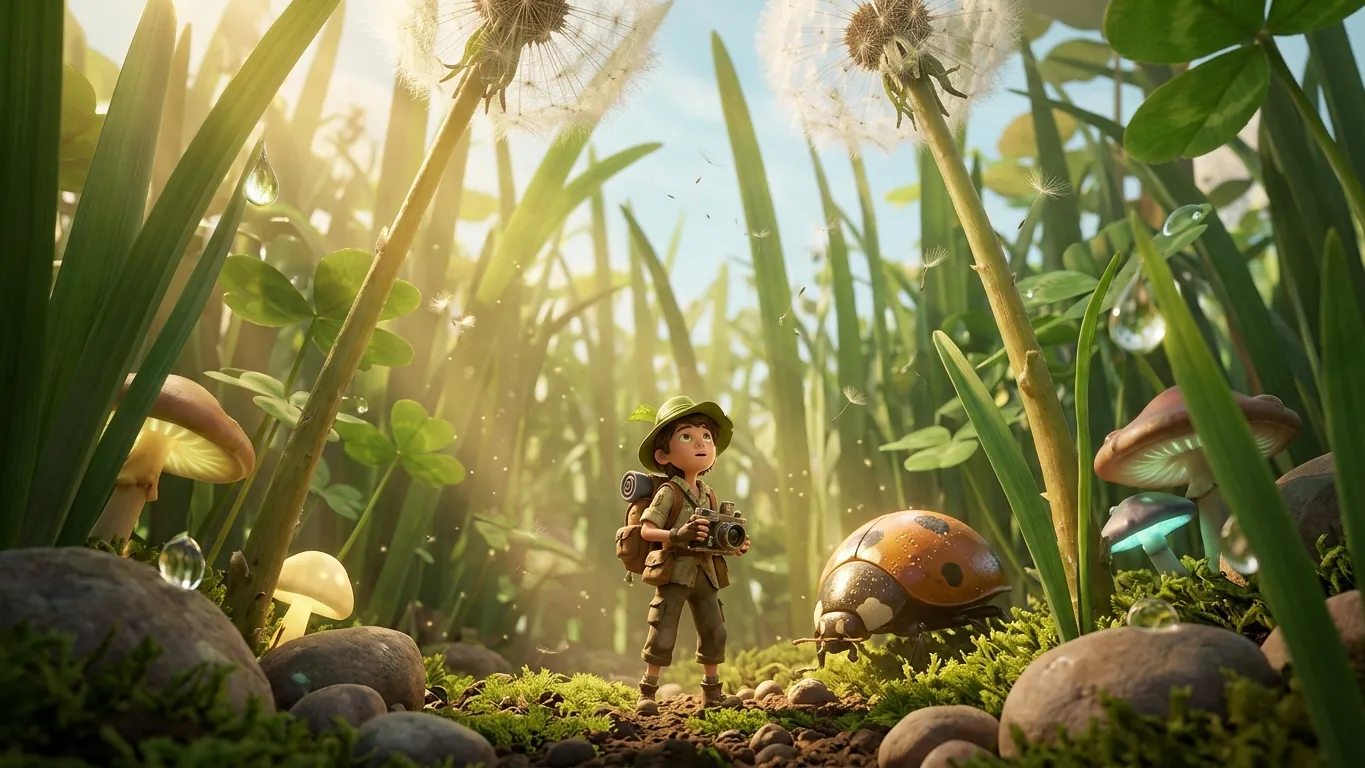 Why tiny worlds feel so big
An opinion piece on why shrinking down to insect size makes an ordinary city park feel vast, wondrous and calm, and why that suits a photography game so…
Read more