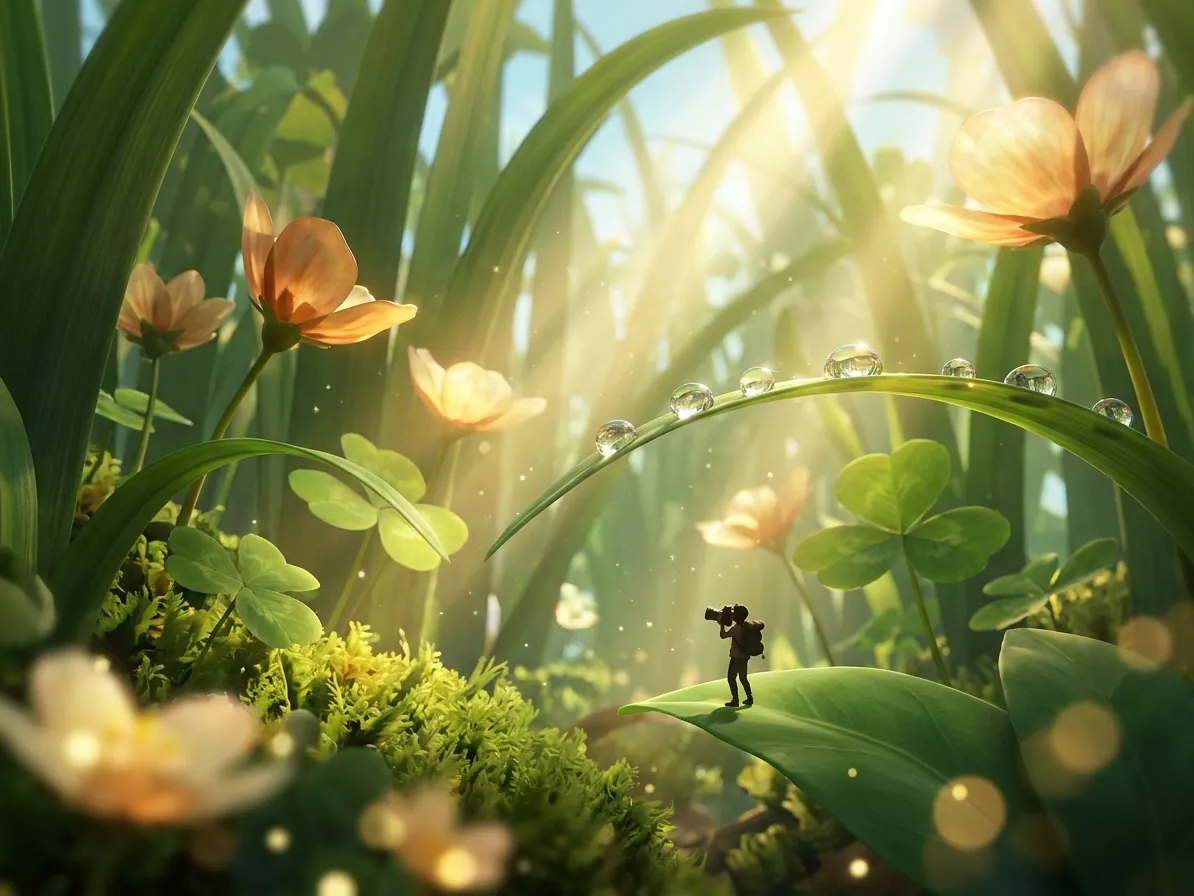
A drop about to fall
Dew gathering at a leaf tip can create a lovely moment of tension just before it slides.
The right moment can turn a good photo into a memorable one. Here is how to read light and movement so you press the shutter at the right time.

Angle and focus prepare a shot, but timing completes it. In a living park, nothing stays still for long. Beetles crawl, leaves sway, drops gather and slide, and light shifts as the morning goes on.
Good timing means being ready before the moment happens. Once you have chosen your angle and set your focus, the last step is patience: watching the scene and waiting for the instant when everything lines up.
The soft morning light is one of the most striking features of this world. It is warm and gentle, and it comes in at a low angle, which brings out texture on bark, leaves and shells.
Watch how sunbeams move through the grass. A beam that lands on a dewdrop for a few moments can make it glow, and that is worth waiting for. Backlit subjects, such as translucent petals or thin wings, often look their most beautiful when the light shines through them from behind.
If a scene feels flat, try waiting or repositioning so that the light hits your subject from the side. Side light creates shadows that give shape and depth to tiny surfaces.
Beetles and other small creatures move in patterns. Some pause on leaf tips, some follow stems upward and some stop to groom or rest. Observing for a short while before shooting helps you predict where a creature will be next.
Instead of chasing a moving beetle, try positioning yourself ahead of it. If it is climbing a stem, frame the top of the stem and wait for it to arrive. This gives you time to set the angle and focus calmly rather than reacting at the last second.
Moments of action, such as a beetle opening its wing cases or two creatures meeting, can make especially lively photos. They are worth the wait.
Keep an eye out for these small events as you explore.
Dew gathering at a leaf tip can create a lovely moment of tension just before it slides.
A beetle spreading its wings adds shape and energy to a frame.
Light briefly touching a subject can make it glow against a shaded background.
Creatures often stop at the end of a stem, giving you a steady subject.
Waiting can feel slow at first, but it becomes part of the pleasure. While you wait, use the time to fine-tune your framing or notice other subjects nearby. If a moment does not come, that is fine; move on and return later.
Timing is a skill that grows with practice. The more you watch the park, the more naturally you will sense when a moment is about to happen.
 Making the most of journal quests
A friendly guide to journal quests in the tiny park photo game: reading tasks, planning routes, matching subjects and keeping exploration relaxed and fun.
Read more
 Building a photo collection you will love
Ideas for growing and curating your photo collection in the tiny park game: variety, themes, reviewing shots and keeping the images that matter to you.
Read more
 How lenses open up new possibilities
An explainer on unlocking lenses in the tiny park photo game, how new lenses expand your options and how to fold them into your shooting habits.
Read more