Grass blades as borders
Shoot through a gap between two blades to create a soft frame around your subject.
The angle you shoot from shapes how a tiny scene feels. Here are practical framing ideas for beetles, mushrooms, dewdrops and grass jungles.
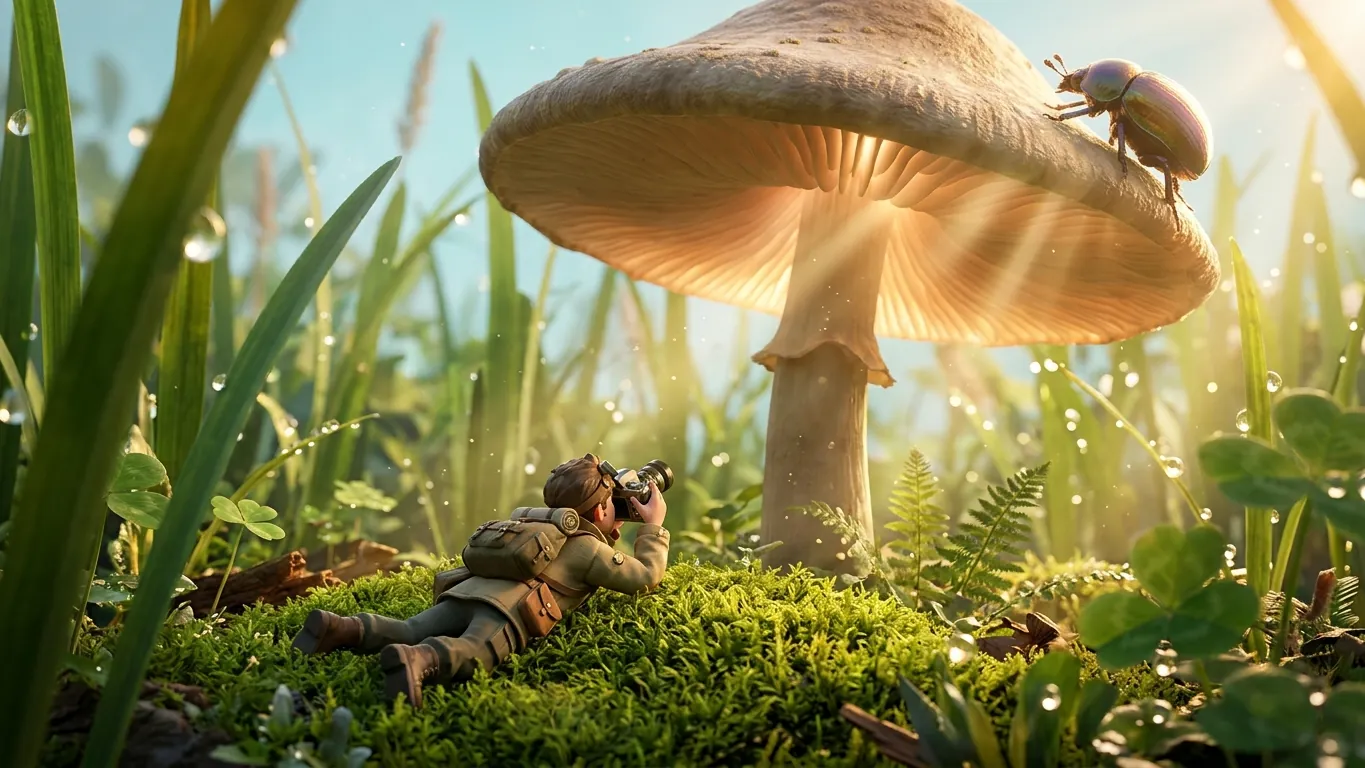
In everyday photography, people often shoot from eye level because that is where the camera naturally sits. In this game, your eye level is already unusual: you are the size of an insect. That gives you a fresh viewpoint, but it also means you need to think deliberately about where you place the camera.
A small shift in height or direction can transform a scene. A beetle seen from above can look like a pattern on a leaf. The same beetle seen from its own level becomes a character with presence. Learning to move around a subject before shooting is one of the most rewarding skills you can build.
Shooting from below makes things feel big and important. Point your camera up at a mushroom and it becomes a tower. Look up through grass blades and they turn into tall trees against the sky.
Low angles work especially well when you want to show the scale of the park. Including the sky or bright background light behind a subject separates it from clutter and gives a clean outline. Try this with beetles climbing stems, too: shooting from below a stem can make the climb look like a small expedition.
The main thing to watch for is balance. If the subject is too small in the frame, the image can feel empty, so move closer until it fills a meaningful part of the picture.
Climbing onto a mushroom cap or a raised leaf gives you a view over the scene. High angles are useful for showing relationships: a beetle approaching a dewdrop, a path of seeds through moss or the shape of a clover patch.
From above, patterns become more visible. Leaf veins, the spiral of a snail shell or the scattered shine of dew can create satisfying compositions. A high viewpoint also helps you plan where to go next, so it is worth climbing even when you are not planning to shoot.
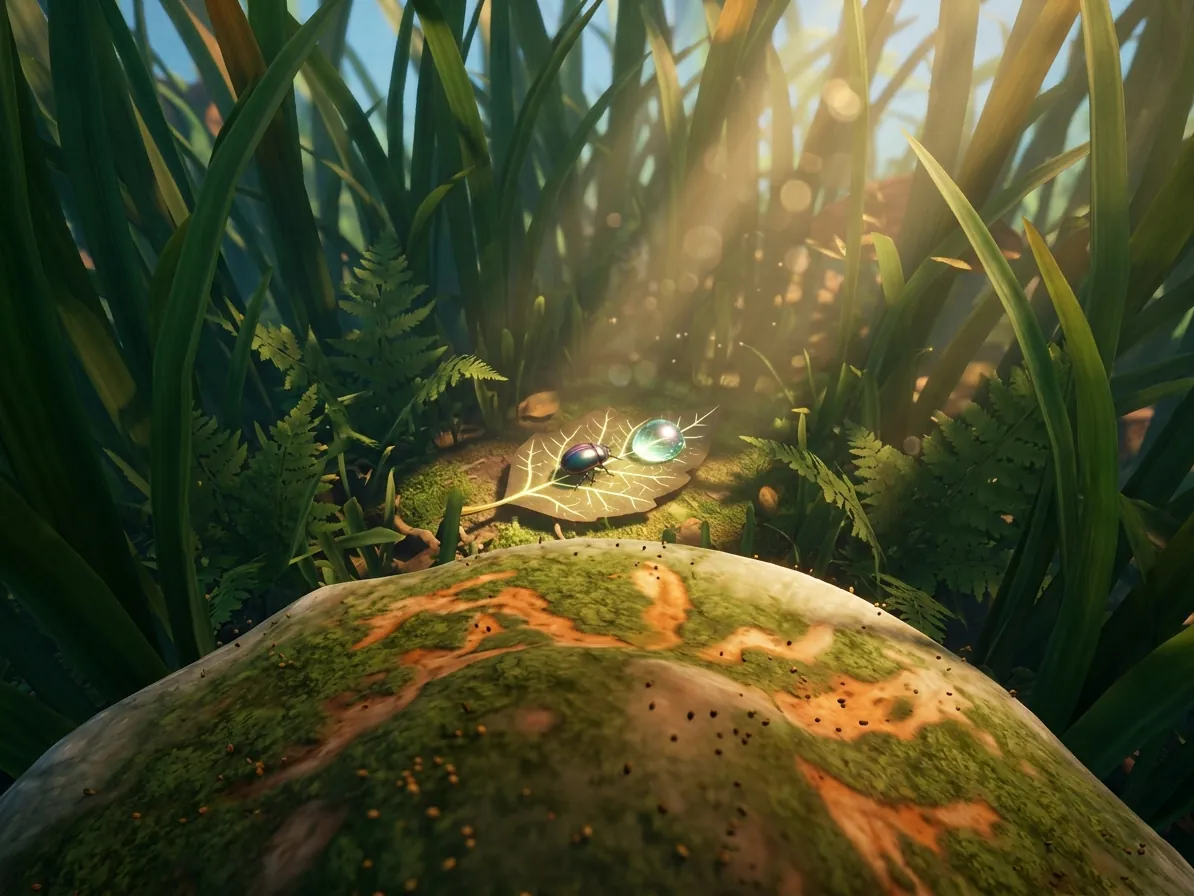
The plants and objects around you can act as natural frames that guide the eye.
Shoot through a gap between two blades to create a soft frame around your subject.
A blurred drop close to the lens adds sparkle and depth without hiding the main subject.
Placing the morning sun behind a beetle or petal can create a glowing outline.
Stems, veins and twigs can lead the viewer's eye towards the point you care about.
A helpful exercise is to pick one subject and take five photos from five different positions: low, high, left side, right side and very close. Then compare them. You will often find that the angle you expected to like least turns out to be surprisingly strong.
This habit trains you to look for options instead of settling for the first view. Over time, you will start choosing angles more quickly and with more confidence, and your collection will show more variety.
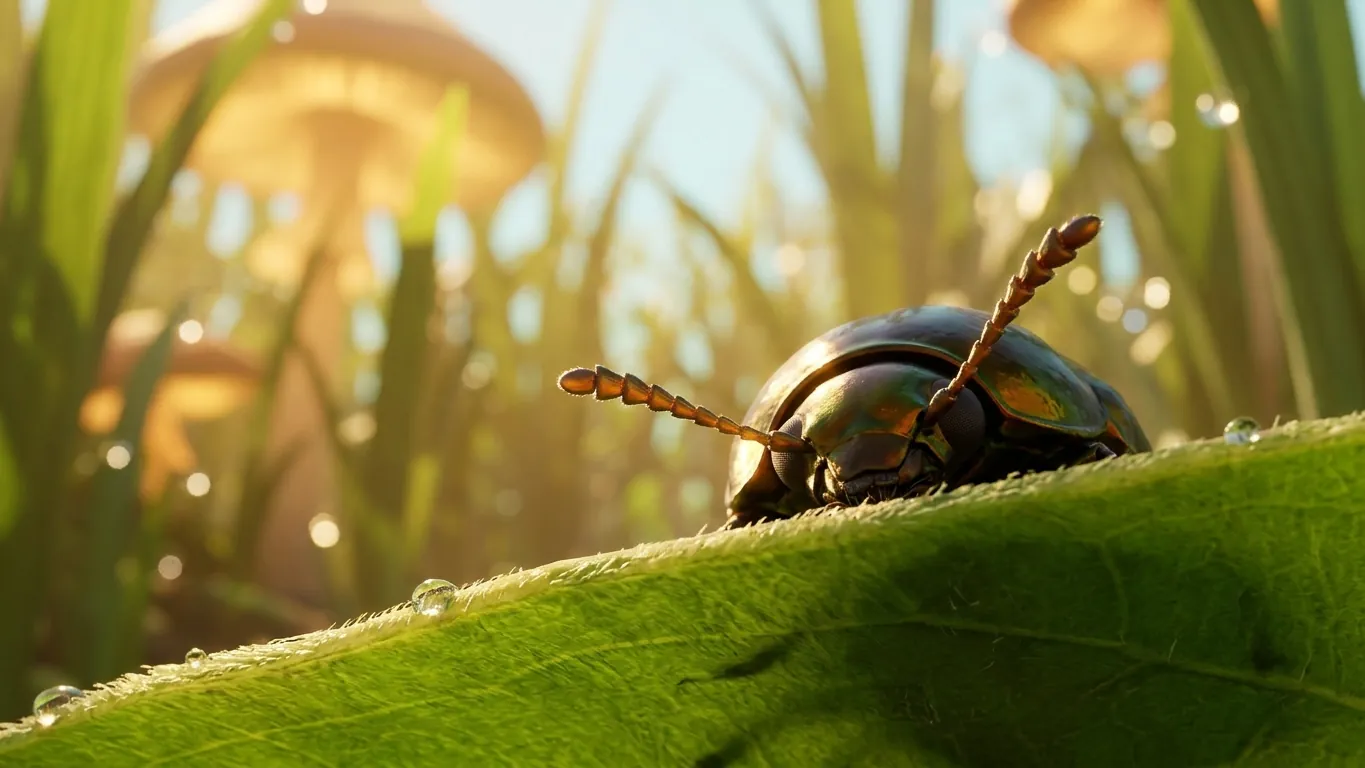 Focus and depth, explained simply
A friendly explainer on focus in the macro park game: where to place the focus point, why backgrounds blur and how to make beetles and dewdrops stand out.
Read more
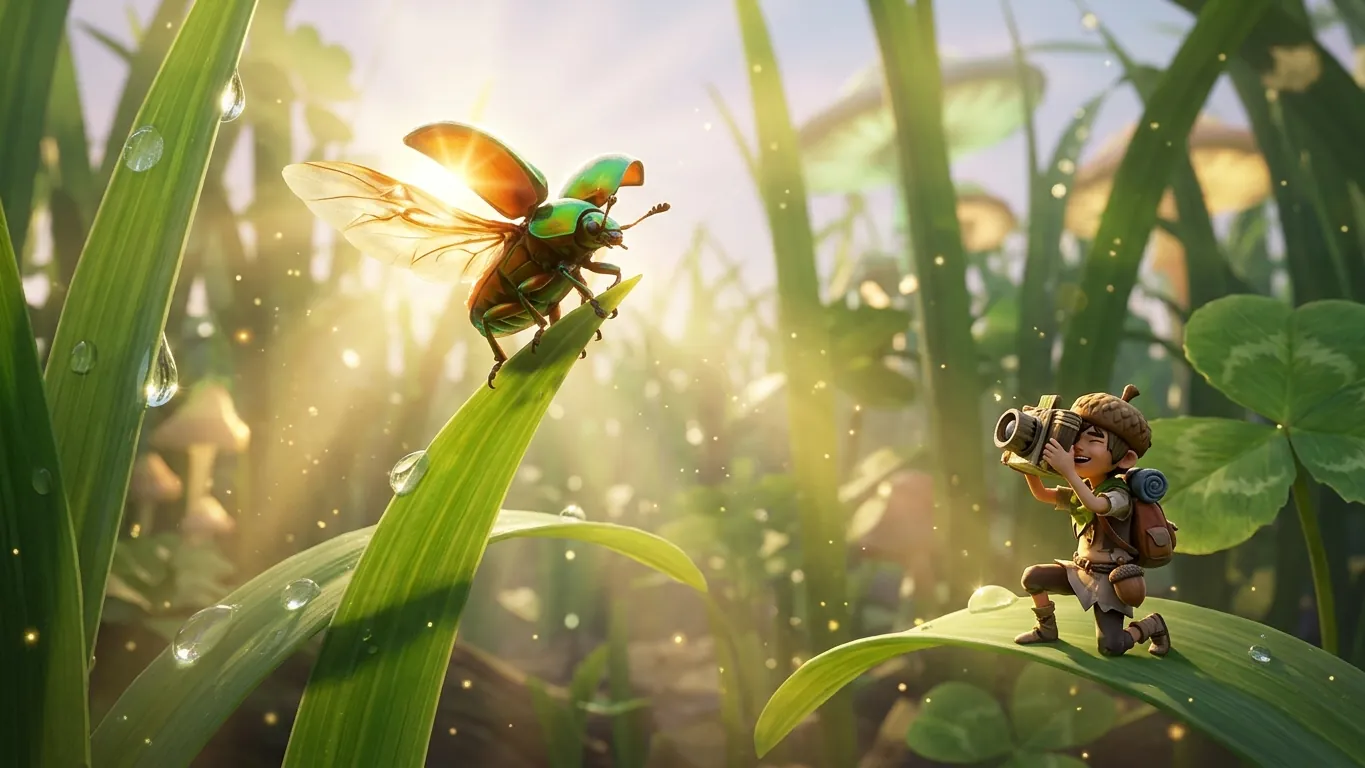 Timing the shot in soft morning light
Tips on timing your photos in the tiny park world: working with soft morning light, waiting for beetles to move and catching dewdrops at the right moment.
Read more
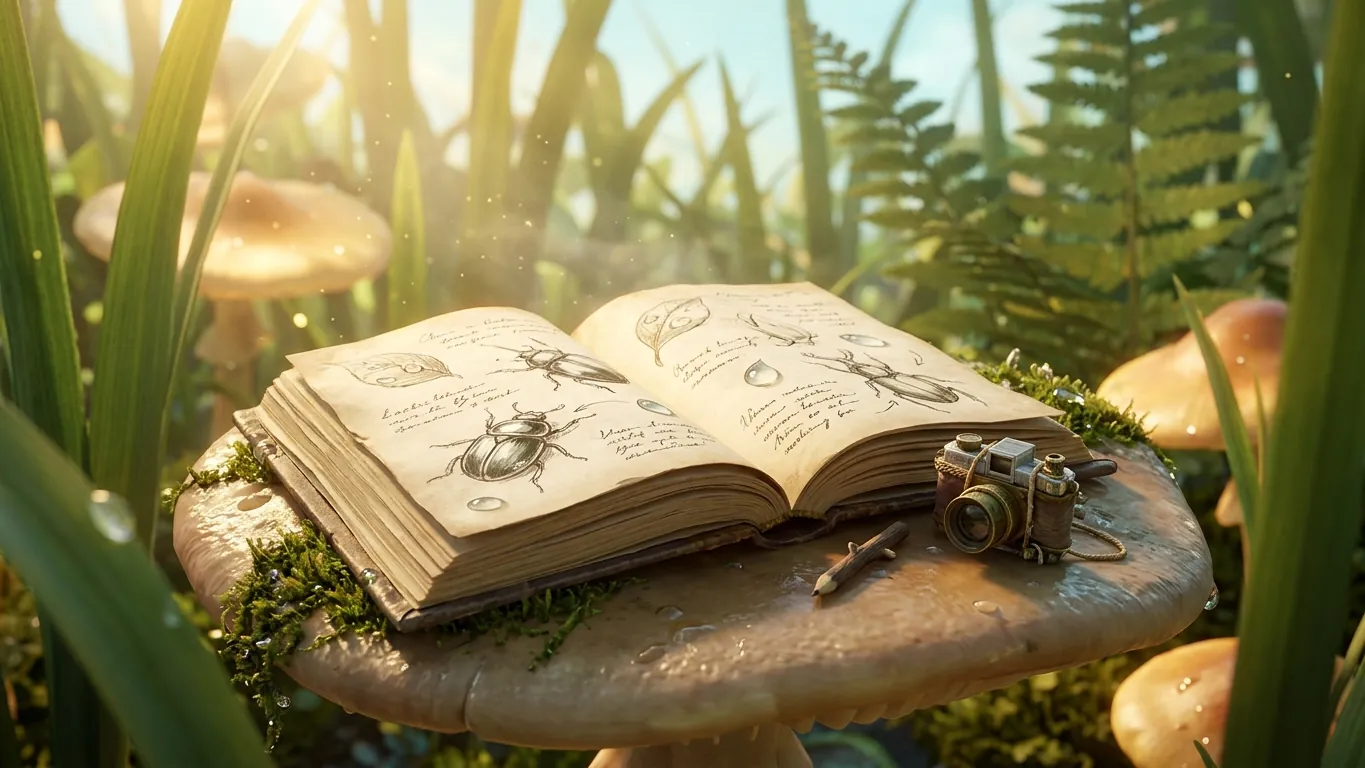 Making the most of journal quests
A friendly guide to journal quests in the tiny park photo game: reading tasks, planning routes, matching subjects and keeping exploration relaxed and fun.
Read more