Focus and depth, explained simply
Focus decides what the viewer looks at first. This explainer covers where to place your focus point and how blur can work in your favour.
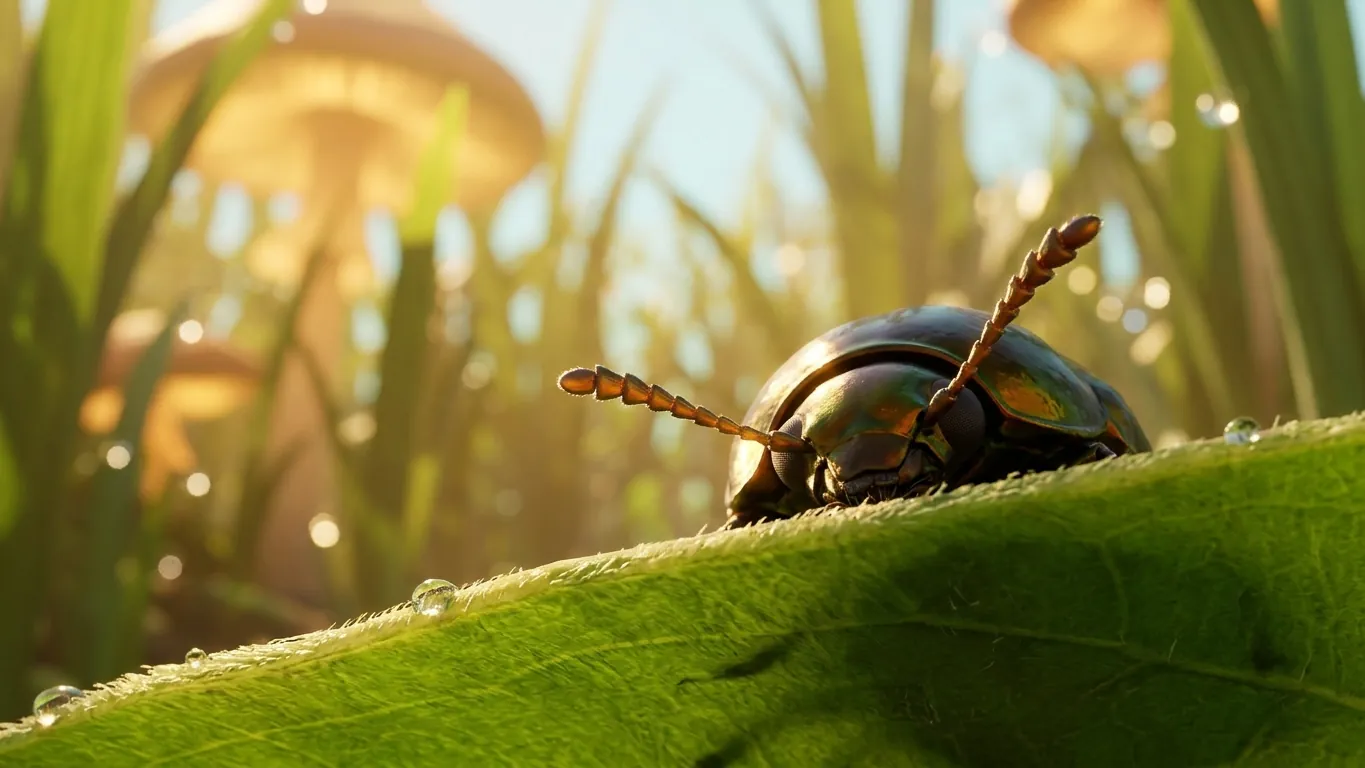
What focus does in a macro scene
When you photograph tiny subjects up close, only a thin slice of the scene can be sharp at once. Everything in front of and behind that slice softens into blur. This is a natural part of macro photography, and the game uses it to make your choices matter.
In practice, this means focus is not just a technical step. It is a creative decision. Where you place the sharp area tells the viewer what the photo is about. A sharp dewdrop with a blurred beetle behind it tells a very different story from a sharp beetle with a blurred dewdrop in front.
Where to place the focus point
For creatures such as beetles, the eyes or head are usually the most natural place for focus. Viewers tend to look at faces first, and a sharp head makes a creature feel alive even when the rest of its body is soft.
For dewdrops, try focusing on the brightest highlight or on the reflection inside the drop. Drops often mirror the surrounding plants, and a sharp reflection can be a lovely detail.
For plants and mushrooms, look for texture: the gills under a cap, fine hairs on a stem or the edge of a petal. Picking one clear point of interest gives the image structure.
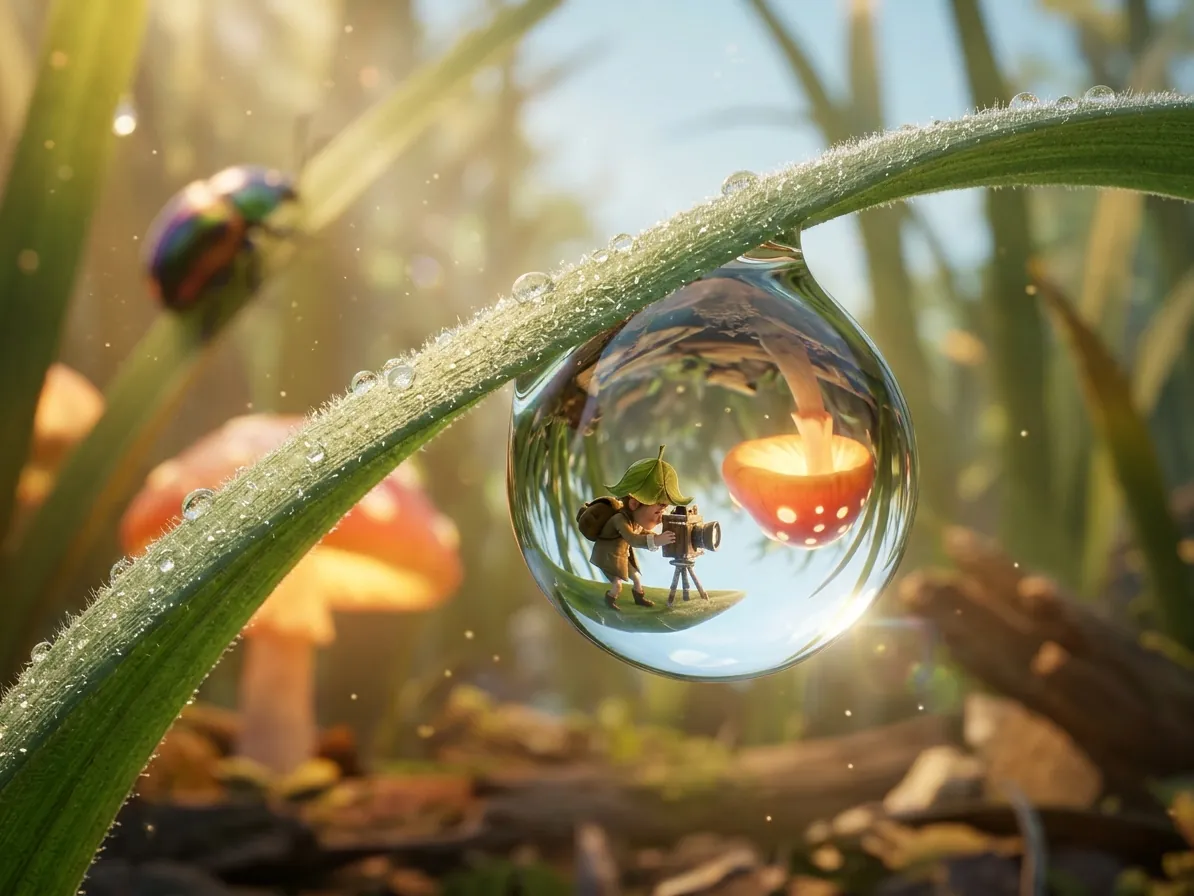
Making blur work for you
Blur is not a problem to fix; it is a tool. A soft background removes distractions and lets your subject stand out. A soft foreground element, such as a grass blade close to the lens, can add depth and a sense that the viewer is peeking into a hidden world.
To get a smoother background, increase the distance between the subject and whatever is behind it. Shooting a beetle on the tip of a stem, with open space behind, usually gives a cleaner backdrop than shooting it against a dense wall of grass.
Morning light adds another layer. Small bright points in the background, like dew or sunlit edges, turn into soft glowing circles when blurred, which can make an ordinary scene feel magical.
A simple focus routine
Use this routine when you are not sure where to focus.
- 01
Name the subject
Decide in one word what the photo is about, such as beetle, drop or cap.
- 02
Find its key detail
Pick the single detail that best represents it, like the head, the reflection or the gills.
- 03
Place focus on that detail
Set the sharp area there and check that it stays sharp as you frame.
- 04
Check the background
Look for bright spots or clutter behind the subject and shift slightly if needed.
Common focus mix-ups
A frequent mix-up is focusing on whatever is closest instead of what matters most. If a grass blade sits in front of a beetle, it is easy to end up with a sharp blade and a soft beetle. Take a second to confirm the right spot is sharp before shooting.
Another is moving after focusing. At this scale, even a small step changes what is sharp. If you reposition, refocus. With a little practice, these checks become quick and natural.
Related articles
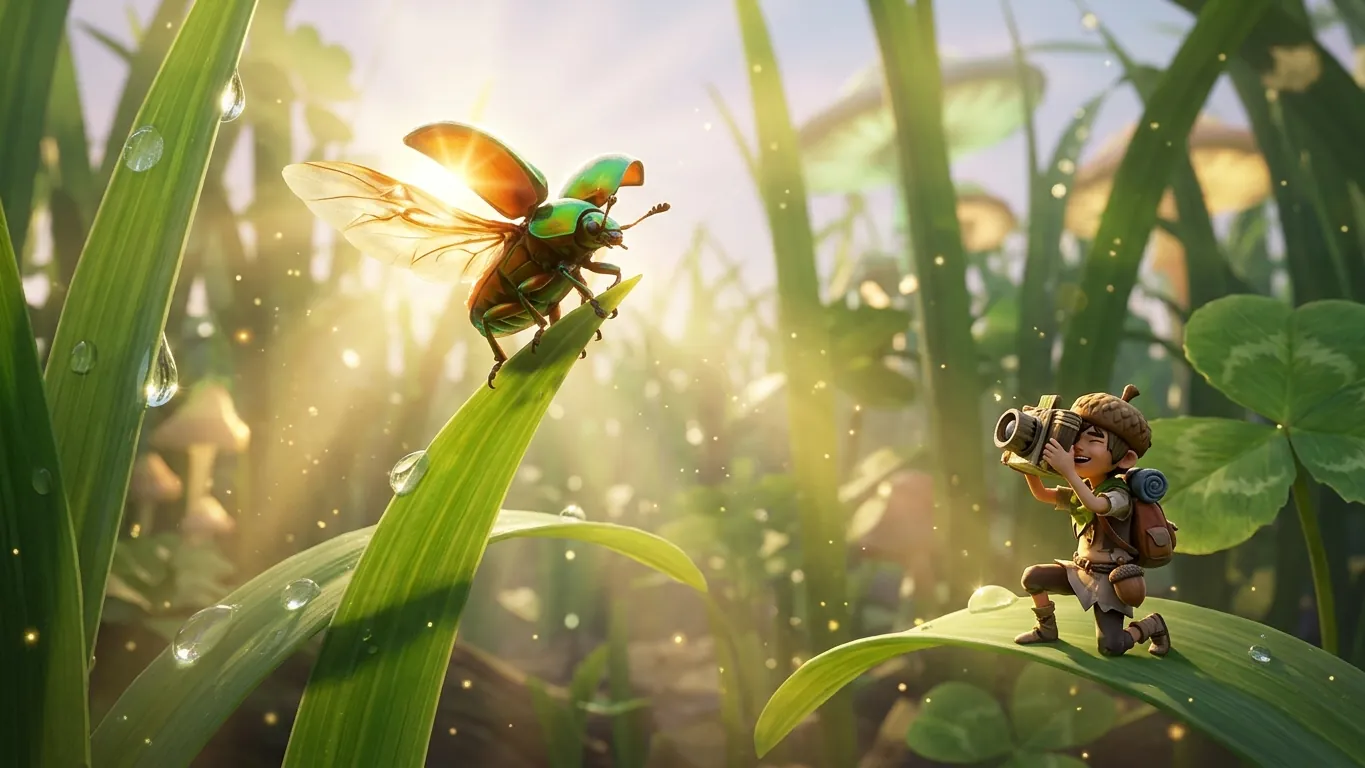 Timing the shot in soft morning light
Tips on timing your photos in the tiny park world: working with soft morning light, waiting for beetles to move and catching dewdrops at the right moment.
Read more
 Making the most of journal quests
A friendly guide to journal quests in the tiny park photo game: reading tasks, planning routes, matching subjects and keeping exploration relaxed and fun.
Read more
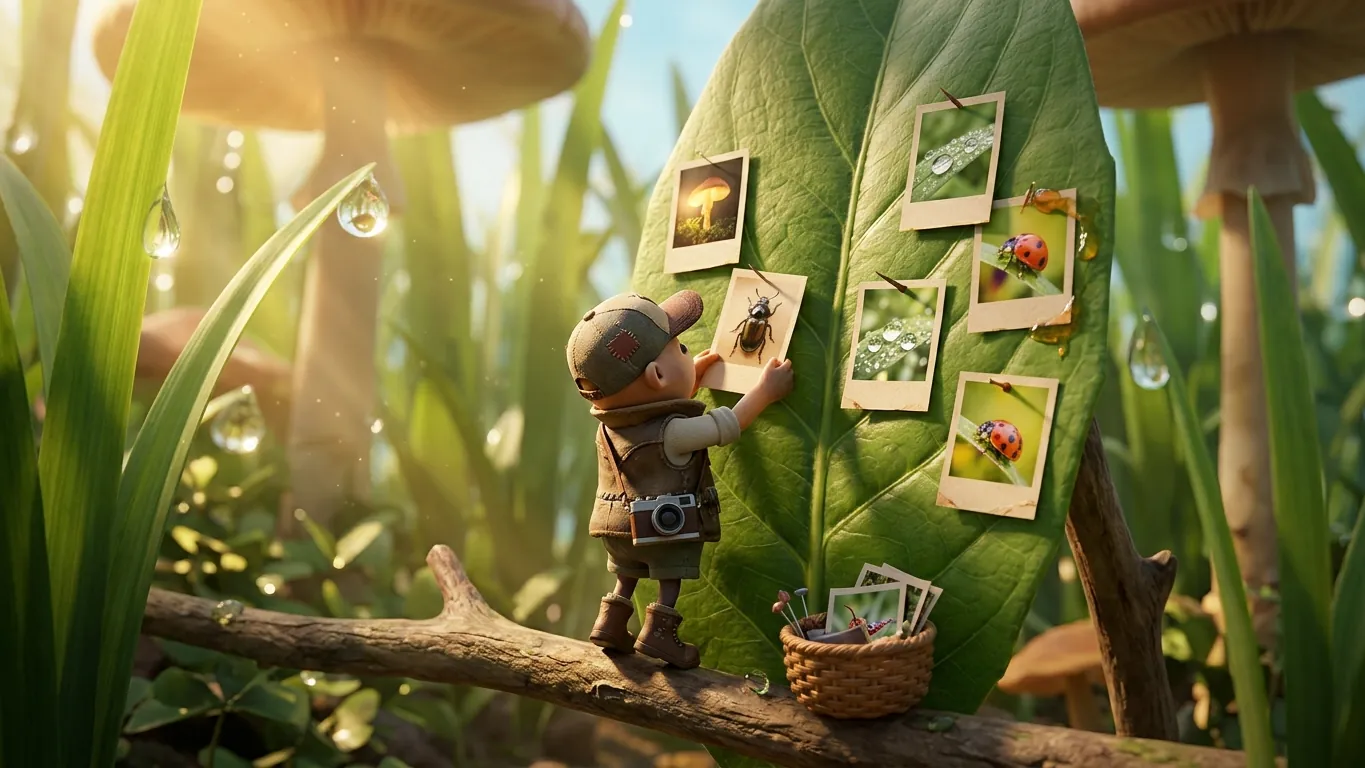 Building a photo collection you will love
Ideas for growing and curating your photo collection in the tiny park game: variety, themes, reviewing shots and keeping the images that matter to you.
Read more